What does "best" even mean when the lab never meets the photographer? Per Cambridge Dictionary, best means "of the highest quality, excellence, or standing" — a definition that sounds simple until you try to apply it to a padded envelope full of exposed film. The honest answer is that no single lab is best for everyone. The best mail-in lab is the one whose prices fit your habit, whose scans fit your scanner-free workflow, and whose packaging survives the postal system.
This piece cannot hand you a leaderboard, and you should distrust any article that does without dated, named evidence behind each row. What it can do is give you the comparison framework: the four things that actually vary between labs, the questions to ask before you mail a roll, and the red flags that should stop you. Think of it as the reading you do before you buy, not the verdict itself.
Mail-in developing — sending exposed film to a lab by post and receiving scans, negatives, or both back — is now how most film shooters without a home setup get their rolls processed. It trades a few days of waiting for a level of consistency most one-hour minilabs abandoned years ago. The trade is a good one, but only if you pick the lab with care.
What actually varies between mail-in labs
Four things separate one lab from another, and only one of them is price.
- Chemistry discipline. A good lab runs fresh C-41 and E-6 chemistry on a schedule and replaces it before it drifts. A careless one stretches developer past its useful life. You cannot see this from a website, but you can see its results: a lab that controls its chemistry produces consistent density roll after roll.
- Scan quality and scan settings. Some labs scan for proof, some scan for printing. The difference shows up in how much shadow detail survives and how the scanner handles a deliberately underexposed frame. Ask whether scans are delivered at a resolution suited to enlargement or only suited to social media, and whether the lab will re-scan a frame on request.
- Packaging and return care. Negatives travel two ways. Sleeves should be archival, flat, and rigid enough not to bend in transit. A lab that returns your strips curled in a flimsy envelope is telling you how it treats the intermediate steps you never see.
- Turnaround and communication. The best labs publish honest turnaround estimates and tell you when a roll is delayed. Silence is a data point too.
How to judge price without being fooled by it
Develop-and-scan pricing is rarely the whole price. Add the cost of shipping to the lab, the cost of getting your negatives back, and any per-frame or resolution surcharge, and two labs that look far apart on a menu can land within a dollar of each other. Our analysis: compare labs on total round-trip cost per roll, not on the headline develop fee.
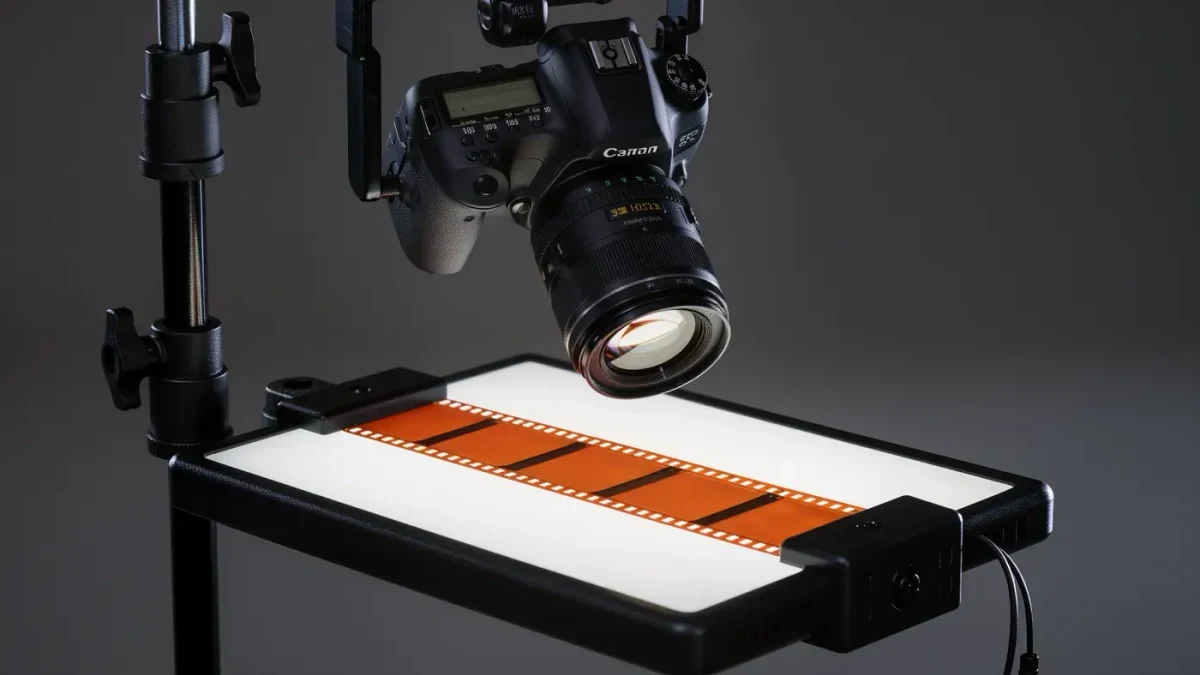
Also compare what the fee buys. A develop-only price is cheap until you price scans separately; a bundled price is dear until you notice it includes a resolution the cheaper quote omits. If you scan at home — our DSLR Scanning for Film Negatives guide covers that route — a develop-only service with careful handling may be the better deal, since you are paying the lab only for chemistry and cutting, not for files you will remake yourself.
What scan quality claims actually tell you
Scan marketing tends to describe hardware rather than outcomes. A scanner model name tells you little without knowing the operator's settings: exposure, sharpening, dust handling, and whether the lab pushes or pulls its scan to rescue an off frame. The useful test is not a spec sheet but a sample. Many labs publish unedited sample scans; look at shadow areas on an ordinary midday frame, not a golden-hour showcase shot. Shadows are where cheap scans fall apart.
One caution worth pencil-marking in the margin: sample galleries are curated. They show the lab's good days. Your assessment should weight consistency — what a lab does with a mediocre roll — more heavily than what it does with a great one.
Packaging: the part nobody ranks and everybody regrets ignoring
Here is the unglamorous truth about mail-in developing: the postal system is the roughest machine your film will ever meet, at both ends of the trip. Outbound, the risks are X-ray and crushing; inbound, the risks are bending, moisture, and dust. A lab worth your negatives treats the return leg as part of the service.
- Negatives should arrive in archival strips, sleeved or sleeved on request, not loose in a paper pouch.
- Flat rigid mailers or boxes beat padded envelopes for anything you care about long-term.
- If you shoot slide film, note that E-6 handling has its own care requirements — our E-6 Home Development Guide explains why mounted slides need stiffer protection than negative strips.
What this means for your first order: mail one sacrificial roll before you mail a treasured one. Treat it as a test of the whole loop — the lab's turnaround, the scan defaults, and the return packaging — before you trust it with the roll you actually care about.
Red flags before you seal the envelope
- No published turnaround estimate, or an estimate that changes without notice between the order page and the confirmation email.
- Scan files delivered without any stated resolution or file format — you should not have to inspect a file to learn what you paid for.
- No policy, stated anywhere, on what happens to lost or damaged film. Labs are careful, but mail is not, and a serious lab has thought about the failure case.
- Price lists with no dates attached. Film prices move; a lab that does not date its pricing is a lab you cannot hold to anything.
Our analysis: rank the criteria, then rank the labs
Every "best labs" list is secretly a weighting. If scans matter most to you — say you print enlargements and never touch a darkroom — then scan quality outranks price and packaging both. If you shoot cheap expired rolls for fun, packaging and price dominate and scan quality can be proof-grade. If you shoot slide film or push process, chemistry discipline tops everything; pushing behavior is the same craft at home or in a lab, as our How to Push Tri-X Two Stops Without Ruining It guide shows, and a lab that handles pushed rolls well has earned the extra trust.
Decide your own weighting first. Then any lab comparison, including any you read elsewhere, becomes usable: check that its criteria match yours, and ignore the rows that do not.
Where mail-in fits in a film habit
Mail-in developing is not the opposite of darkroom skill; it is a stage of it. Many shooters start by mailing rolls, then learn home C-41 with our C-41 Home Development Guide, then keep mailing only the films whose chemistry they will not run at home. Others stay mail-in forever and spend the saved hours printing — the Darkroom section covers that side of the craft. Both are complete answers. The failure mode is not choosing wrong; it is choosing casually.
What the evidence here establishes is a method, not a winner: weigh chemistry discipline, scan outcomes, packaging care, and total round-trip cost, in whatever order your photography demands. What remains unknown is which lab currently executes best on those criteria — that answer has a shelf life, and it belongs to dated, named testing, not to an evergreen list. Check recent dated comparisons before you mail, and re-check before your next batch. Negatives are the only original you have. Mail them accordingly.