Fuji Velvia 50 is the most famous slide film ever made: an ISO 50 daylight transparency with RMS granularity of 9 and resolving power of 160 lines per millimeter per Fujifilm's datasheet — numbers describing something built for projection, not compromise. It costs roughly $18-21 a roll as of 2025, and trades tripod discipline for color nothing else produces.
Why do shooters still buy slide film?
Because a transparency is the photograph. A developed roll of Velvia mounts into cardboard and goes on a light table as a finished object — no print interpretation, no scanning decisions, no negative to reinterpret later. What you metered is what exists on the film: saturated, luminous, and unforgiving of error. That finality, archaic by negative-film standards, is exactly what a stubborn minority of shooters still pays for.
Velvia 50 is the purest expression of the format. Fujifilm's datasheet numbers tell one half of the story — a 50-speed emulsion with slide-film tight grain — and the color does the rest: reds that press against the edge of the gamut, blues that go cobalt, greens that made the film the default choice of the nature-photography world for a generation.
| Spec | Value |
|---|---|
| Speed | ISO 50/18° (Fujifilm datasheet) |
| Process | E-6 |
| Granularity | RMS 9 |
| Resolving power | 160 lines/mm |
| Rough price | $18-21 per 36 exposures, as of 2025 |
How tight is the exposure, honestly?
Brutally. Slide film holds a narrow brightness range, and Velvia 50's rendering — deep shadows, brilliant highlights — leaves little room on either end. Meter error that negative film shrugs off becomes a lost frame here: a fraction of a stop shifts the palette, a full stop in either direction usually ruins it. Three decades of published field guidance converge on the same advice: spot-meter the midtones, bracket when the frame matters, and treat the film's own density, not a histogram, as the truth.
Bracketing strategy: meter carefully once, then shoot the metered frame plus a half stop either side on scenes that matter. Three frames of insurance cost a fraction of a spoiled location — the arithmetic slide shooters have always lived by.
Long exposures need extra respect. Like most slide films, Velvia 50 loses sensitivity as exposures stretch, and its reciprocity behavior demands correction once shutter speeds slow beyond ordinary handholding ranges — Fujifilm's datasheet carries the guidance. Twilight and star-trail work are possible; casual night metering is not.
What does the rendering actually do?
It flatters nature and punishes people. Greens deepen into emerald, autumn reds and oranges ignite, and sky blue saturates toward the memory of the scene rather than the scene itself. Skin, on the other hand, warms past healthy into sunburned — a documented, widely repeated caveat that pushed portrait shooters toward Astia and Provia generations ago.
The look defined an era of published nature photography: magazine covers, calendars, and contest winners of the 1990s and 2000s carry its signature. Fujifilm discontinued the original formula in the mid-2000s and shipped a reworked version in 2007, and the current emulsion remains the saturation benchmark against which every vivid film since has been measured — including by critics who find it too much.
Seasons and weather bend the palette further. Autumn ignites the red channel into something close to hallucination; spring greens go jade; after rain, when foliage holds droplets and rock goes dark, the film produces its most published work. Harsh midday, by contrast, finds its limits — contrast stacking on saturation turns forest into stew.
Related stories: Kodak Ektar 100: Max Color · Kodak Gold 200: Still Worth It?.
What do shooters say about it?
Two camps, both loud. Devotees describe projection — a mounted Velvia chrome on a light table or screen — as the reason they shoot film at all, a claim repeated across decades of published essays on the medium. Detractors call the palette artificial, the exposure window a tax, and the price, at roughly $18-21 as of 2025, an indulgence. Both camps agree on the facts: nothing else renders color this way, and nothing else holds you this accountable.
For comparison from an entirely different altitude: satellite imaging has spent fifty years wrestling with the same problem Velvia solves at human scale — representing landscape color so it reads true to the eye. NASA's Earth Observatory archives show how hard saturated, honest color is to get right.
Is shooting slide film still practical?
Practical is doing heavy lifting. E-6 labs have thinned to a specialist layer — most cities have one or none, and mail-order turnaround takes days — and each roll costs roughly half again what negative film does as of 2025. Every frame therefore carries ceremony: tripod, meter check, sometimes a bracket, and the quiet arithmetic of keepers versus cost.
And yet the devotees keep paying, for reasons that survive contact with the product. A mounted chrome is a finished object with no interpretive gap between photographer and viewer; the color exists in the thing itself, not in a scan of a negative. Projection — an actual light, an actual wall — remains the most beautiful presentation color photography has ever had, and Velvia is its best argument.
The honest framing: slide film is a chosen discipline, like large format or wet plate. Nobody drifts into it. Those who choose it find the constraints are the content.
What field craft keeps it sharp?
Tripod always, mirror-up and cable release where the camera allows, and the sturdiest support the walk permits — ISO 50 punishes camera shake that faster films forgive. Compose deliberately; at this price per frame, zooming with your feet is cheaper than zooming with your bracket.
A polarizer earns its place in the kit. Velvia's skies are already saturated, and a polarizer deepens them further while stripping glare from foliage and wet rock — the combination produces the over-the-top color the film is both loved and sued for. Watch exposure compensation: filter factors bite harder at ISO 50.
Who should shoot it?
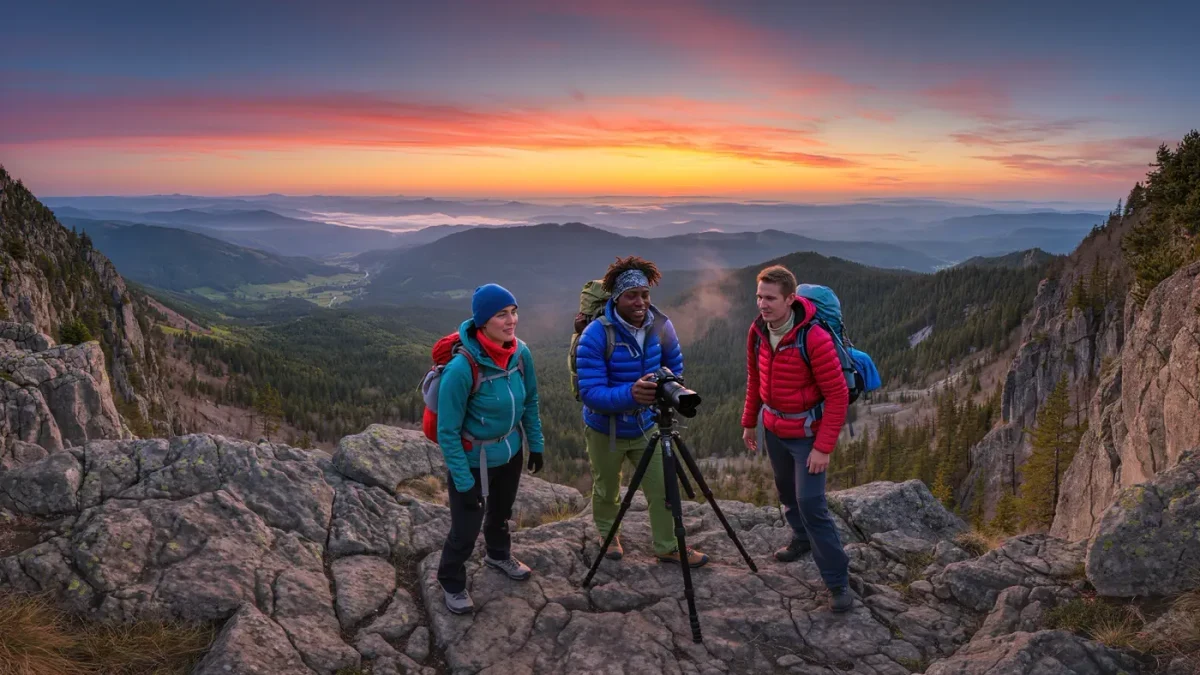
- Landscape shooters with tripods: the classic pairing; dawn and dusk alpenglow is the film's home turf.
- Projection and light-table devotees: the finished-object pleasure no negative stock provides.
- Disciplined students: nothing teaches metering faster than consequence.
- Skip it if you shoot handheld in changing light, photograph people, or want cheap frame counts — any 400-speed negative beats it on all three.
The verdict: Fuji Velvia 50 is a specialist instrument from an era when photography had a ritual side, and it survives because nothing has replaced what it does. Meter like it matters, tripod like it matters, and the chrome on the light table will look like memory made physical. That final ceremony — loupe, light table, patience — is half of what the roll costs and all of what it pays back.