The right first film camera is the one that matches how you shoot, not the one with the loudest reputation. Pick a body type that fits your habits — a manual SLR if you want to learn, a point-and-shoot if you want to carry it everywhere, a medium format folder if you want big negatives and patience. Set a budget that leaves money for film and development, because the camera is only the entry fee.
The dictionary definition of the task is a good place to start: to choose, according to The Free Dictionary, is "to select from a number of possible alternatives" — and that is exactly what stands between a new shooter and a good first body. There are more alternatives than ever, and the trick is narrowing them by how you live, not by what collectors say.
This guide walks through the main body types, what each asks of you, and how to spend the rest of your budget wisely. No rankings, no hype — just a way to match a camera to your life.
What should a beginner actually look for in a film camera?
Look for three things: reliable metering or an easy way around it, lenses you can still find, and a body you will actually carry. Everything else is negotiable. A first camera should teach you exposure, not fight you over it, so a working light meter matters more than a famous name.
Availability is the quiet second criterion. Film photography runs on consumables, so pick a system with lenses and batteries that are still easy to source. A camera that needs a discontinued battery or a rare lens turns every roll into a scavenger hunt. Our cameras hub covers the major systems in depth if you want to compare before you commit.
Finally, be honest about size and weight. The best camera is the one that leaves the house with you. A pocketable compact that gets shot beats a heavy classic that stays in a drawer, and that single truth should shape your whole search.
What is an SLR, and why do so many beginners start there?
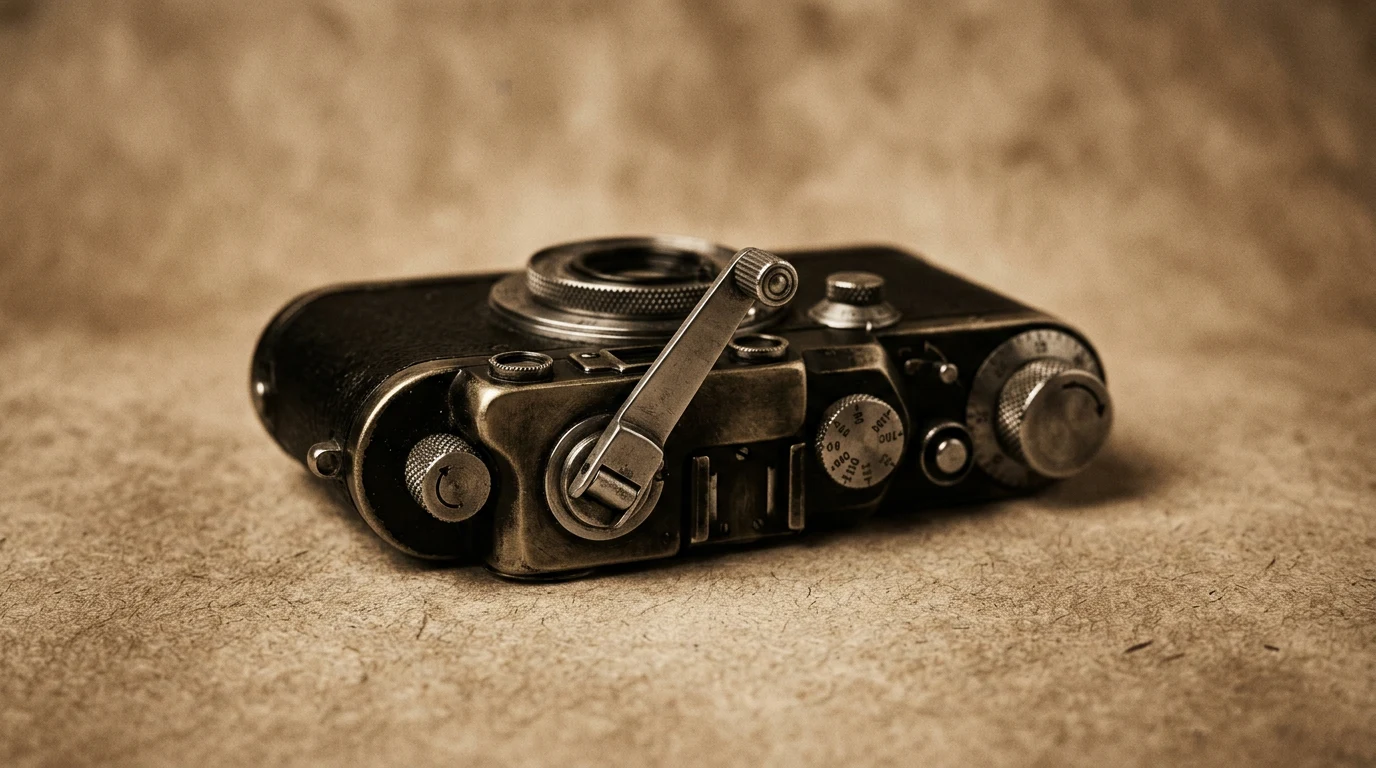
A single-lens reflex camera shows you the scene through the same lens that takes the picture, using a mirror that flips up when you press the shutter. That through-the-lens view is why SLRs are such good teachers: what you see is what you get, frame by frame.
Manual-focus SLRs from the film era are plentiful, repairable, and usually accept a wide range of interchangeable lenses. Many were made in enormous quantities, which keeps the secondhand market deep. For a beginner, that depth means you can start with a body and one lens, then add glass as your eye develops. Our guides to individual classics — the Pentax K1000 Buying Guide: The Truth, the Canon AE-1 Buying Guide: Worth It?, and the Nikon FM2 Buying Guide: The Verdict — walk through the trade-offs of the most common starting points.
The learning curve is real. You will load film, set the film speed, focus, and meter by hand or with simple automation. That friction is a feature: it forces decisions, and decisions are how you learn exposure. Shoot a few rolls and the mechanics become muscle memory.
Would a point-and-shoot suit you better?
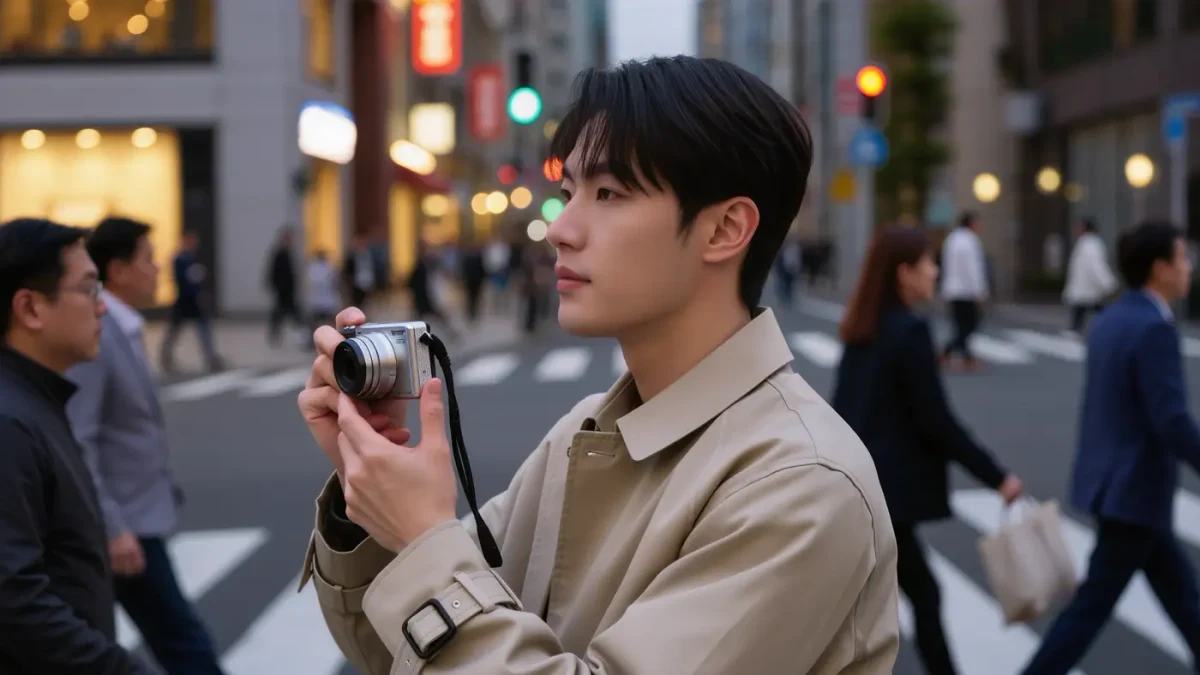
A point-and-shoot puts the lens, meter, and often the focus motor in one small sealed package. You frame, press, and move on. If your goal is capturing life as it happens — friends, travel, streets — this is the least friction film can offer.
The category spans a huge range, from humble fixed-focus compacts to premium autofocus models with sharp lenses. The premium end has become expensive as demand has grown; our Contax T2 Guide: Point-and-Shoot Gold covers one of the most sought-after examples, while the Olympus XA Buying Guide: Small Wonder shows how capable a truly pocketable camera can be. Newer shooters should also look at modern releases: the Pentax 17 Is Proof Zone Focusing Never Went Out of Style covers a brand-new half-frame camera built specifically for this moment.
The trade-off is control. Most compacts decide exposure and focus for you, and zone-focus models ask you to estimate distance. You give up some teaching value and gain spontaneity. If you already understand exposure from a phone or digital camera, that trade often makes sense.
When does medium format make sense as a first camera?
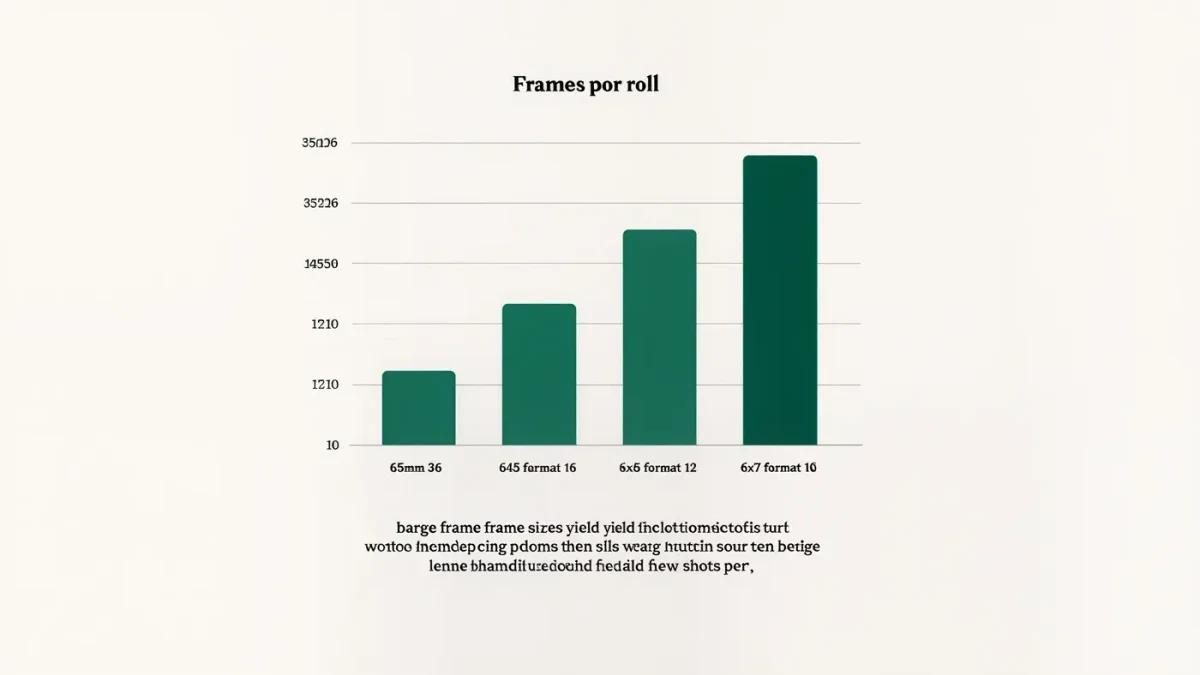
Medium format uses film much larger than 35mm, which means bigger negatives, finer grain, and a different rhythm. Cameras in this class range from twin-lens reflexes you look down into, to modular workhorses with interchangeable backs. The Yashica Mat 124G Guide: TLR Worth It? and the Mamiya RZ67 Guide: 6x7 Workhorse cover both ends of that spectrum.
Here is the honest counsel: medium format is a wonderful second camera and a demanding first one. Film and development cost more per frame, the bodies are heavier, and the shooting pace is slower. If you are drawn to portraits, still lifes, or deliberate landscapes — and you are willing to pay for each exposure — start here. If you are unsure, begin with 35mm and graduate. Our First Medium Format Camera: Start Here guide lays out the full decision.
How should you split your budget?
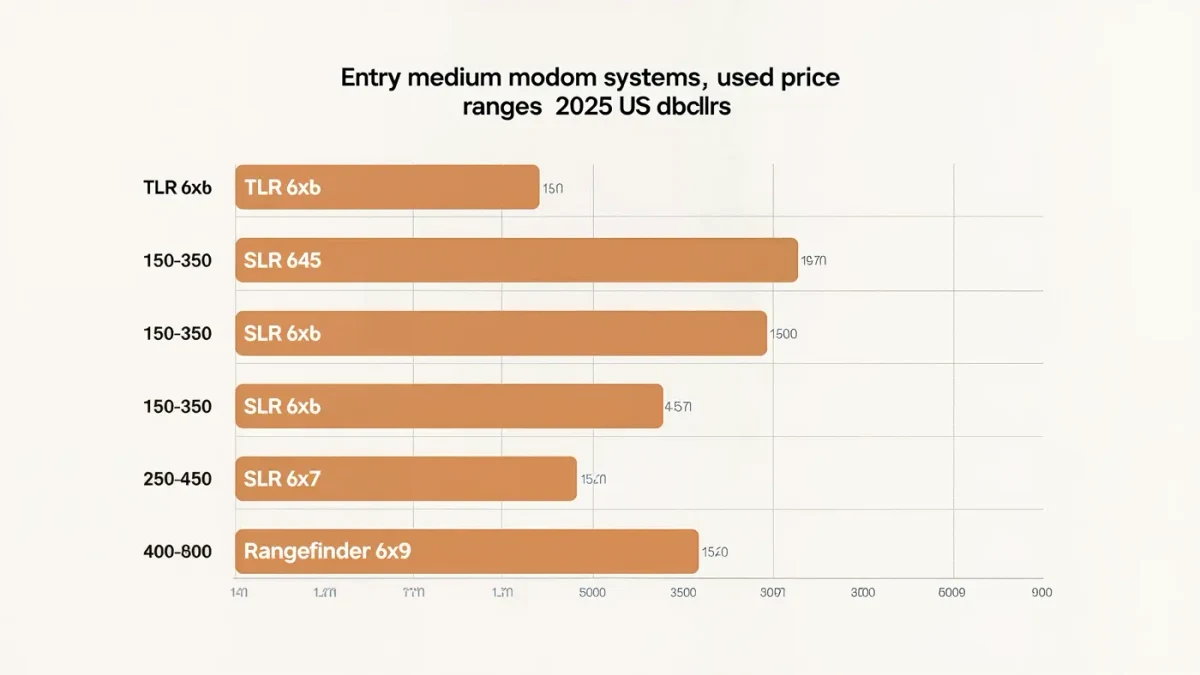
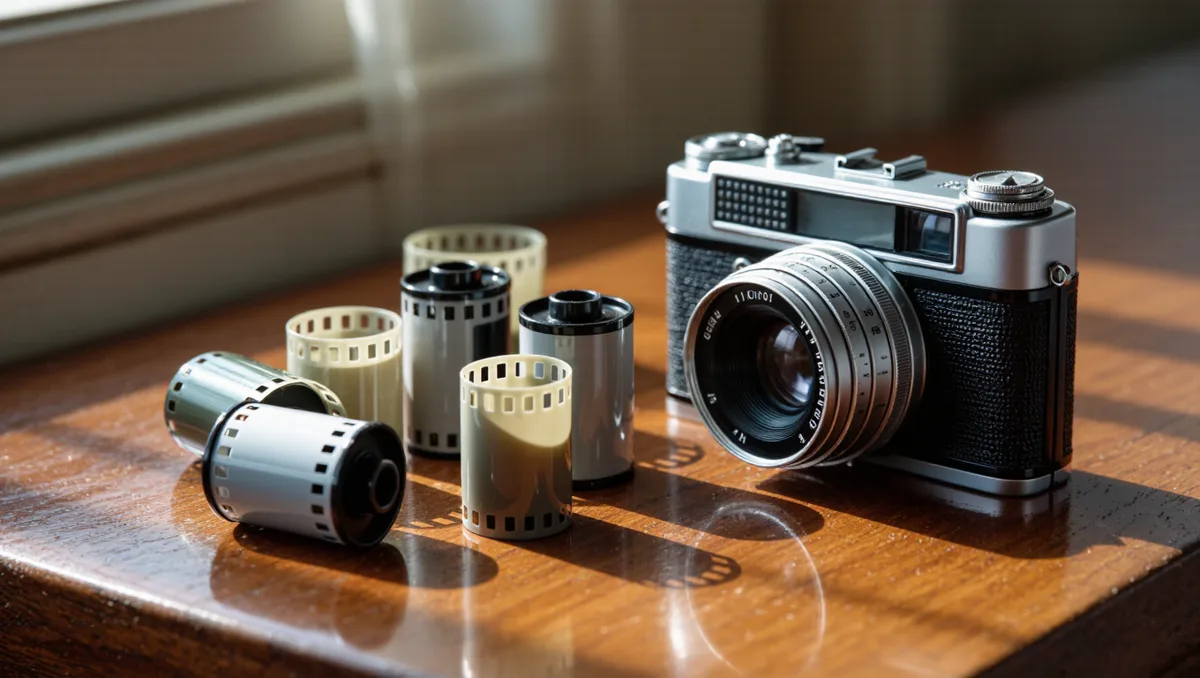
Think in thirds: camera, glass, and consumables. A body that eats your whole budget leaves nothing for film, development, or scanning, and a camera without film is a paperweight. Prices move constantly — film prices in particular have shifted in recent years — so check current listings before you set your number, and treat any price you read online as a snapshot with a date on it.
- Camera and lens: buy the simplest reliable setup that fits your chosen body type. Condition matters more than model; a clean, tested example of a modest camera beats a mint-collectible with an unknown meter.
- Film and processing: budget for several rolls plus lab fees, or for the chemicals if you plan to develop at home. Our film section covers stock choices, and the darkroom section covers home processing.
- Contingency: keep a reserve for a light seal replacement, a battery, or a CLA. Old cameras nearly always need something small.
Buy from sellers who test what they sell, ask whether the meter and shutter speeds were checked, and read the return policy. A little patience at purchase saves a frustrating first roll.
What this means for your first purchase
Our analysis comes down to this: choose by habit, not by halo. If you want to learn exposure, get a manual SLR with a working meter and one normal lens. If you want to document your life, get a compact you can pocket. If you fall in love with big, deliberate negatives, medium format will be waiting — and starting on 35mm first will make you better at it.
What the evidence of the current market establishes is that supply is deep at the beginner end and thin at the fashionable end, so the unfashionable reliable choice is usually the affordable one too. What remains unknown is any single camera's condition until you or a trusted seller inspects it, which is why the seller matters as much as the model. Pick the body type that fits your days, budget for the film after the camera, and buy from someone who stands behind the shutter. That is the whole method.